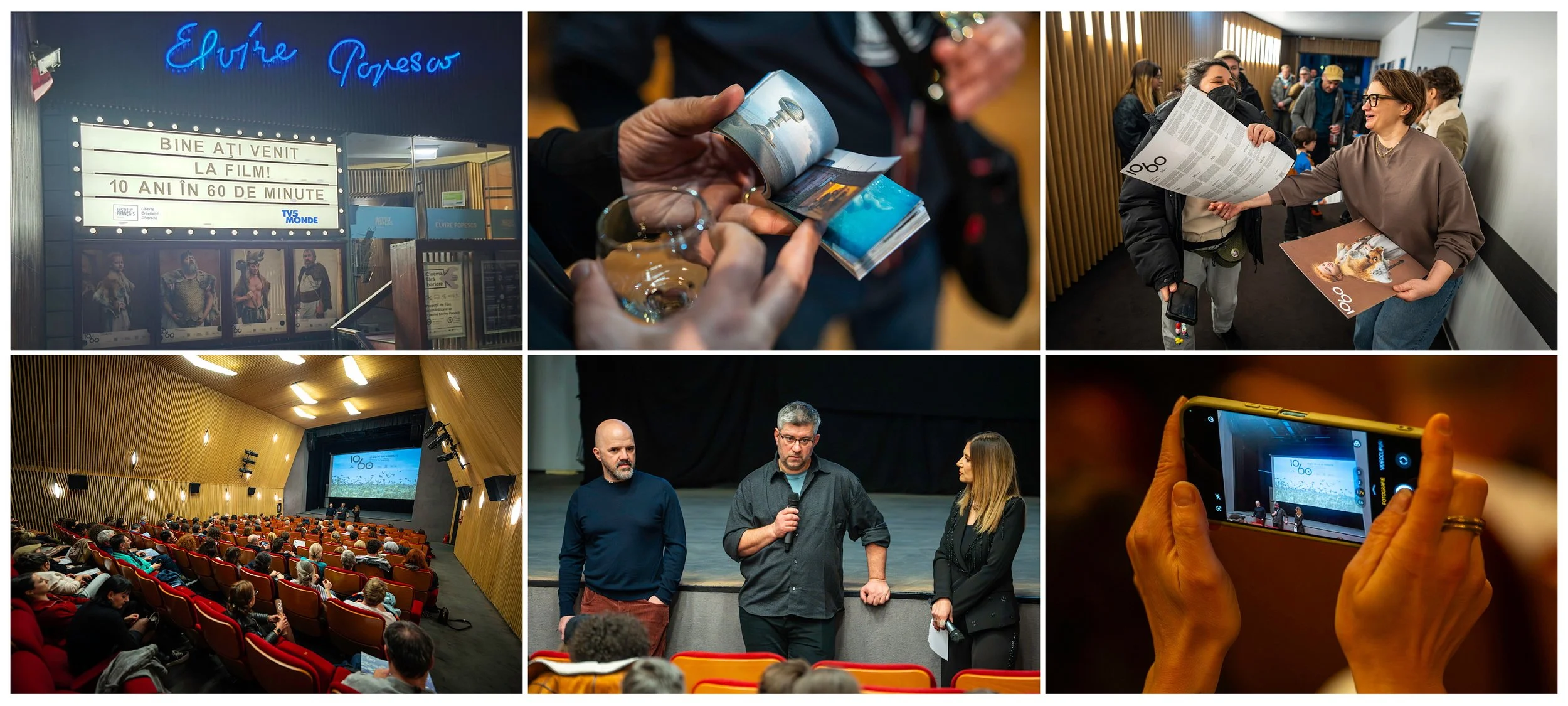
8 PHOTO STORIES ON CINEMA SCREEN
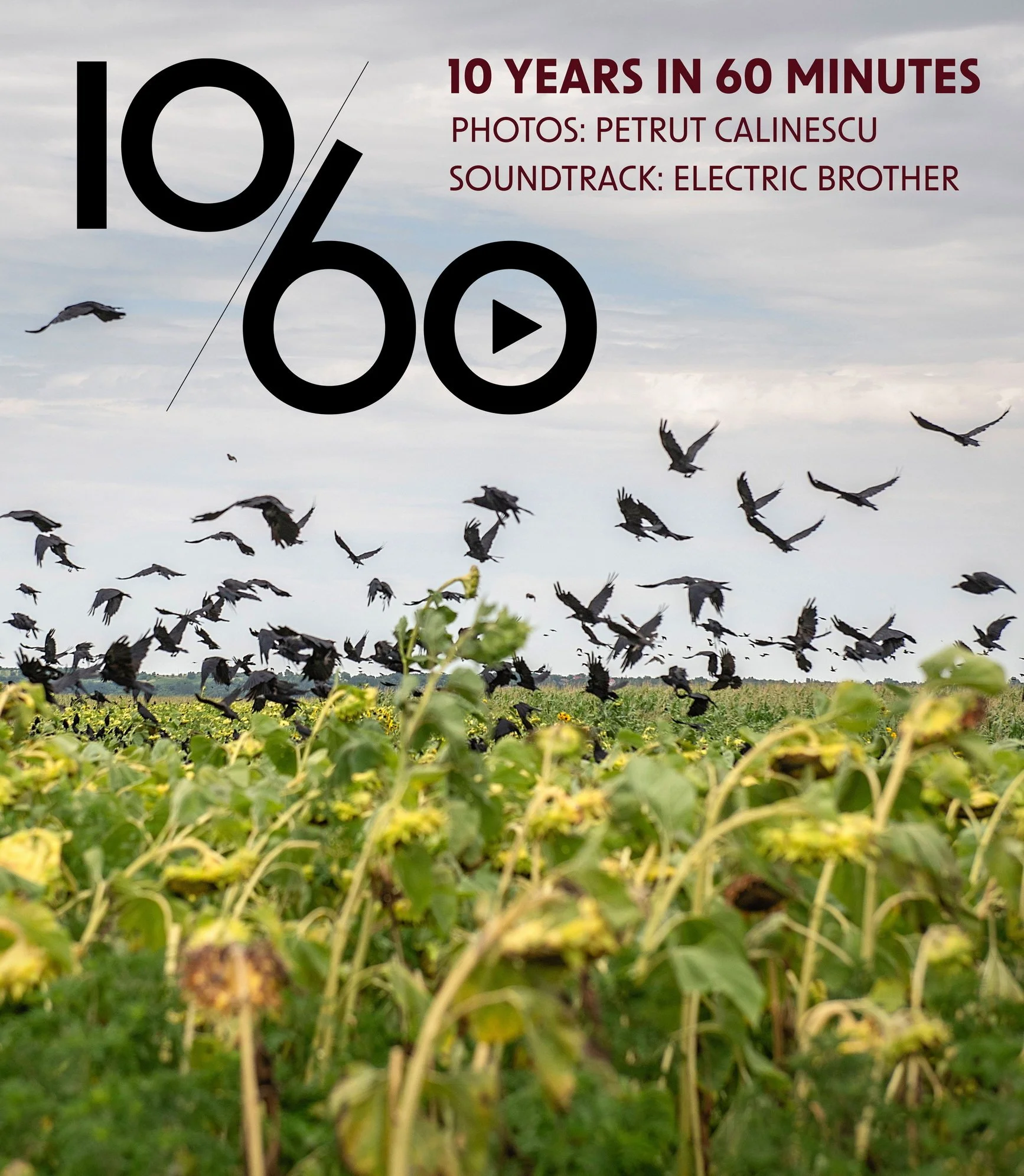
“10 Years in 60 Minutes” is a multimedia screening by The Romanian Center for Documentary Photography (CdFD), bringing together a selection of eight photo documentary stories developed over the past 10 years by Petruț Călinescu, with an original soundtrack composed by Electric Brother inspired by sounds recorded during the documentation process.
Migration and identity, national myths and peripheral realities, war and peace on the Black Sea, desertification and watermelons, chaotic urbanisation, life in garages, and years spent on the couch.
-
Pride and concrete is a journalistic project in which the authors intend to document, every ten years, the way in which the traditional Romanian village is transforming as a result of people leaving to work abroad. In a context where, for commercial or political reasons, the image of an idyllic village, untouched by change, is promoted, Pride and concrete documents a unique and irreversible phenomenon: the sudden transformation of the traditional village as a result of labor migration abroad.
Pride and concrete tells a story spanning decades about the hopes, ambitions, and sufferings of an entire community in the north of the country who have left to work abroad. These people have sacrificed many years of Western comfort in the name of a tradition of social competition, which forces them to build a life of luxury in their home villages, which they will most likely never experience.
Quote: "Golden rule: never eat as much as you produce. If you make 50 euros today, put 40 aside. The secret is to save every penny. I took my wife out to a restaurant only once in the 15 years we've been in Paris. And now she's giving me grief for how much I spent then." Sas Grigore Griga, known as Cotroș, from Certeze
-
Mysterious, threatening, mythical, and unknown, with a mix of totalitarian regimes and fledgling democracies, the Black Sea region is like a melting pot of ethnic minorities. Regardless of nationality or social status, the citizens of the countries surrounding the Black Sea work all year with a single dream in mind—to spend a week at the seaside. Nationalistic naval parades and stray mines floating offshore are now the backdrop to long, sunny days for tourists on the beach, in a landscape where relaxation and tension, sometimes even the echoes of war, intertwine in the summer.
The project began in 2010 with a four-month trip to the countries around the Black Sea and continued to document how people around the sea relate to its shores. Since 2016, the focus has shifted to the military tensions triggered by the annexation of Crimea. Nuclear threats and the possibility of a third world war have brought the region back into the international spotlight after a long time.
-
The story follows how the founding myth of the Romanian people is reinvented and reclaimed in today's Romania. The Dacians left behind no form of writing, and this "blank page" of their history has been filled, over time, with all kinds of theories and interpretations. Between reenactment festivals, Burebista tattoos, and "Dacian" products in supermarkets, the project offers a visual map of how the past is reactivated and transformed into an instrument of identity and propaganda. Without making judgments or drawing conclusions, the project is an act of contemporary cultural archaeology, in a landscape where the boundaries between history, myth, and ideology are increasingly difficult to draw, leaving viewers to create their own narrative. Some of the photographs were exhibited in 2025 in a collective exhibition at the House of European History in Brussels.
Quote: "I deliberately brought all these voices together, without filtering them. Because perhaps — just like truth — history lives in each of us through the way we choose to understand it." (Petruț Călinescu, photographer)
-
The Craiova–Calafat–Corabia triangle, the hottest and driest corner of Romania, is slowly turning into a desert. The heat, sandy soil, and lack of rain make life impossible, but ideal for growing watermelons. The Dăbuleni area is a hive of people, tractors, and trailers during the summer. A national brand and a source of pride for politicians, the Dăbuleni watermelon is not supported in any way by state subsidies. Here, summers are measured in tons of watermelons and in the hope of a year without hail. People live in a precarious balance between luck and effort, growing grafted watermelons on pumpkins and guarding their crops day and night from crows and thieves. Amidst burnt plastic, abandoned wells, and sun-scorched fields, a silent struggle for survival is underway. The stories of these people, who defend their harvest as if it were their reason for living, paint a portrait of a marginal world, on the borderline between agriculture, myth, and human resilience.
Quote: "As crippled as he may seem, you won't see a watermelon pecked by crows. He's such a good guard. We don't have anyone else anyway. Whoever is in shape gets to work."
-
At the garages documents life in the garages surrounding apartment blocks in cities in Romania and the Republic of Moldova. The uses of the garage are as diverse as human nature, and the forms they take tell us about the needs of the inhabitants that were not taken into account when the living spaces were designed.
Tens of thousands of garages were built in the capital of the Republic of Moldova, Chișinău, during communism, and in the years of transition, many more were built illegally. Today, few of them are simple shelters for cars. People store pickles and various seasonal items there, make wine (in some cases, with grapes grown on the garage), and hold spontaneous or long-planned parties. The mayor of Chișinău was also caught drinking in a garage and playing improvised instruments, while 2 kilograms of uranium were discovered in another garage. You can visit an art gallery, there is a fresh fish shop, or a museum of old computers.
Quote: "We are like on a warship here. Women don't come here, wives, that is. We are free!" (participant at a birthday party in a garage in Chișinău)
-
Groups of people from different social classes and ages sitting together, looking in the same direction. A spontaneous collective portrait of Bucharest: groups of strangers, together yet separate, against the backdrop of the city in its most diverse forms: architectural contrasts, urban agglomerations of neighborhoods from the communist era, over which the transition has organically built construction sites and fields on the outskirts.
An audiovisual study of the relationship between the capital's architecture and its inhabitants, from vantage points that may seem random: RATB bus stops. Here, ad hoc group photos are taken in a setting that is fascinating and surprising in its diversity.
The result: a mapping of the seemingly mundane places of the capital, which usually do not arouse anyone's interest. They describe the city realistically, with multiple layers of interpretation: sociological, architectural, and urbanistic.
-
10 years on the couch is an exercise in visual anthropology and cultural voyeurism in the domestic setting in which we live while watching TV. We look into the eyes of today's Romania through the faces of those who watch television. We enter living rooms, kitchens, dorm rooms, and offices, where the television becomes a domestic altar and a control panel for leisure time. The furniture in a room is arranged around the television, the subscription is paid before other necessities, and the ritual is common to all social classes.
Statistics: Romanians spend an average of 330 minutes/day in front of the television, compared to the European average of 220; globally, we are surpassed only by Saudi Arabia and the Philippines. On average, 10 years of an adult's life in Romania are spent on the couch in front of the television.
-
Barbecue enthusiasts, corporate workers, fishermen, the newly wealthy, disadvantaged people, pigeon fanciers, shepherds, herbalists, witches, marathon runners, model aircraft enthusiasts—all of them, for one reason or another, intersect their lives in the capital's peripheral ring.
The suburbs, until recently an antechamber to the great capital, a place of transit for those who cannot yet afford to live in the city, have lost their role as the wall of a besieged fortress. Today, we are witnessing a reverse flow: those who flee the city and move into their dreams before they come true.
Quote – "When I first visited the complex, I was amazed by the holiday spirit it inspired in me. It looked like a small hotel complex. In a way, it was as if we were all on the same vacation." Liliana, Confort City resident